Heat Treating and Thermal Processing: A Complete Buyer's Guide
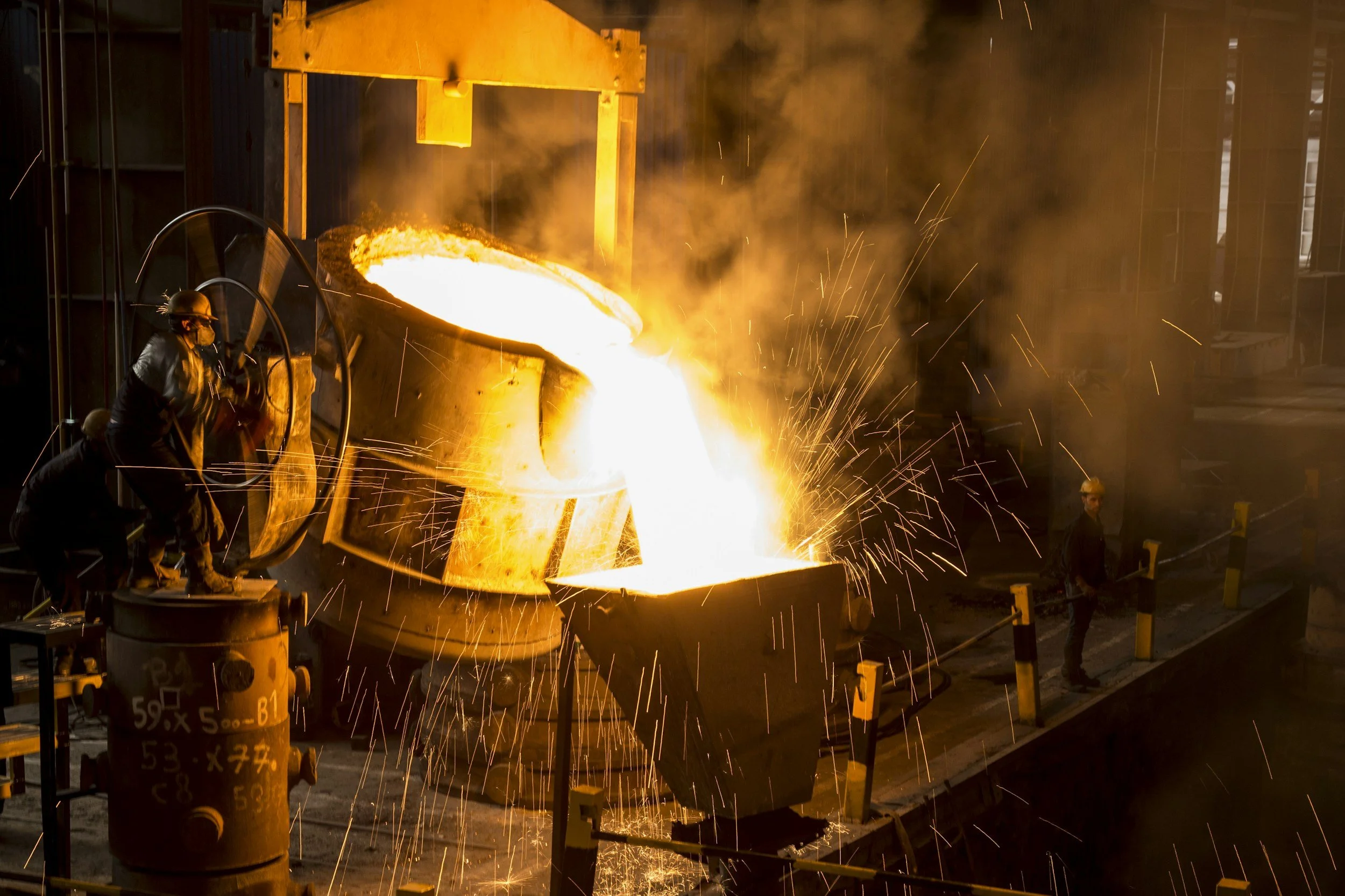
Find Qualified Heat Treating Suppliers Faster — Before You Ever Send an RFQ
Heat treating and thermal processing are among the most specification-sensitive capabilities in manufacturing. Getting them right means the difference between a component that lasts and one that fails under load. Getting sourcing wrong — chasing suppliers who can't meet your alloy, tolerance, or certification requirements — costs weeks you don't have.
This guide breaks down everything buyers need to know about heat treating processes, what to look for in a supplier, and how to qualify the right partner before your RFQ goes out. If you're newer to manufacturing sourcing in general, our What Is Contract Manufacturing? A Buyer's Guide is a solid starting point before diving into process-specific capabilities.
What Is Heat Treating & Thermal Processing?
Heat treating and thermal processing are controlled manufacturing processes used to modify the mechanical and physical properties of metals. Through precisely managed heating and cooling cycles, these processes improve hardness, strength, wear resistance, ductility, and dimensional stability.
The core sequence is simple in concept, demanding in execution: heat the component to a specified temperature, hold it for a defined period, then cool it at a controlled rate to achieve the target microstructure and material properties.
These processes are widely applied across gears, shafts, fasteners, bearings, dies, tooling, structural components, pressure parts, and precision-machined components — anywhere performance, fatigue life, and durability requirements are non-negotiable.
Key industries relying on heat treating include automotive, aerospace, energy, heavy equipment, defense, and industrial manufacturing.
Common Heat Treating & Thermal Processes
Annealing
Annealing softens metal, improves ductility, and relieves internal stresses from forming, machining, or welding. The component is heated to a defined temperature and slow-cooled under controlled conditions. The result: improved machinability, reduced brittleness, and a uniform microstructure — ideal for parts that will undergo additional forming or machining downstream.
Normalizing
Normalizing refines grain structure and improves mechanical property consistency. Components are heated above the critical transformation temperature, then air-cooled. Compared to annealing, normalizing yields higher strength and toughness, and is commonly used on carbon and alloy steels ahead of machining or further heat treatment.
Quenching & Tempering
Quenching rapidly cools metal from an elevated temperature — using air, oil, polymer, water, or gas — to increase hardness and strength. Tempering follows to reduce brittleness and dial in a controlled balance of hardness, toughness, and ductility. This combination is the workhorse process for gears, shafts, fasteners, and structural components requiring high fatigue resistance.
Carburizing
Carburizing is a case hardening process that diffuses carbon into the surface of low-carbon steel at elevated temperatures, creating a hard, wear-resistant outer layer over a tough, ductile core. It's the go-to process for gears, cams, and bearings exposed to repeated contact or sliding wear.
Nitriding
Nitriding introduces nitrogen into the steel surface at relatively low temperatures, forming hard nitrides that improve wear resistance, fatigue strength, and corrosion resistance. Because it doesn't require quenching, nitriding produces minimal distortion — making it ideal for dies, molds, crankshafts, and high-tolerance precision components. For a deeper look at how die and tooling geometry influences process selection, see our guide to Tool and Die Manufacturing: Capabilities, Processes, and Why It Matters for Production Quality.
Induction Hardening
Induction hardening uses localized electromagnetic heating followed by rapid quenching to selectively harden specific areas of a component. Surface hardness improves while the core stays tough — the right process for shafts, gears, and wear surfaces under localized stress.
Flame Hardening
Flame hardening applies direct heat to targeted areas, then rapidly quenches. It offers localized surface hardening for large or irregularly shaped components where furnace-based processes aren't practical.
Stress Relieving
Stress relieving reduces residual stresses introduced by machining, welding, casting, or forming. Parts are brought to a sub-critical temperature and held long enough for stress relaxation — without significantly altering mechanical properties. The payoff is improved dimensional stability and reduced risk of cracking or distortion in service. Stress relieving is frequently required after operations covered in our Metal Fabrication Basics: Cutting, Bending, and Welding Explained guide, as welding in particular introduces significant residual stress.
Vacuum Heat Treating
Vacuum heat treating uses sealed furnaces with controlled vacuum or inert gas environments to prevent oxidation and surface contamination. The result is precise temperature control, clean surface finish, and minimal distortion — a standard for high-performance alloys and aerospace-grade components.
Austempering & Martempering
These controlled quenching methods reduce distortion, cracking, and residual stress during hardening. Austempering and martempering improve toughness and dimensional stability, and are used where consistent mechanical properties are critical across the part geometry.
Cryogenic Treatment
Cryogenic treatment exposes components to extremely low temperatures to transform retained austenite and stabilize microstructure. Used as a supplemental treatment for tooling and high-performance parts, it extends wear resistance, dimensional stability, and tool life.
How Heat Treating Fits Into the Broader Manufacturing Process
Heat treating rarely happens in isolation. Most components requiring thermal processing have already been through one or more upstream manufacturing steps — forging, casting, machining, or fabrication — and the prior process history directly influences which heat treat cycle is appropriate.
For example, forged components often undergo normalizing or quench-and-temper to achieve final mechanical properties. If you're sourcing forged parts, understanding how forming method affects material state is important. Our Open-Die vs Closed-Die Forging: Key Differences, Benefits, and Applications guide covers this in detail. Similarly, cast components may require annealing or stress relief before machining — our Sand Casting vs. Die Casting: Which Is Right for Your Project? guide is a helpful reference for buyers working with both casting and downstream heat treating.
For precision parts, the interaction between machining tolerances and heat treat distortion is one of the most common sourcing complications. Our Precision Machining: Why This Capability Matters and How TandemOne Helps You Evaluate It guide walks through what to look for — and how process sequencing affects final dimensional accuracy.
Metal cutting operations are also directly relevant: Metal Cutting and Bending Manufacturing: Processes, Capabilities, and How to Find the Right Supplier covers the upstream steps that often precede thermal processing on structural and formed parts.
What Buyers Should Look for in a Heat Treating Supplier
Not all heat treating suppliers are built the same. When qualifying a vendor, go beyond process capability and evaluate:
Certifications — NADCAP, AMS, ISO 9001, or customer-specific approvals (especially critical for aerospace and defense)
Furnace and equipment types — vacuum furnaces, pit furnaces, atmosphere-controlled chambers, induction equipment
Alloy experience — familiarity with your specific material grades (tool steels, stainless, titanium, nickel alloys, cast iron)
Quench media options — oil, polymer, gas, water — different media produce different results on the same geometry
Distortion control capabilities — fixturing, press quenching, neutral salt bath processes
Testing and inspection — hardness testing (Rockwell, Brinell, Vickers), case depth verification, metallurgical reporting
Capacity and lead time — batch vs. continuous processing, rush capability, geographic proximity for time-sensitive programs
Our 5 Metrics to Consider When Choosing the Right Supplier post provides a practical framework for structuring this evaluation across any manufacturing capability, including heat treating.
Getting this information upfront — before issuing a formal RFQ — saves significant time and prevents mismatched bids.
Find Heat Treating Suppliers Faster with TandemOne
Sourcing a heat treating supplier the traditional way means cold outreach, incomplete capability data, and multiple rounds of back-and-forth before you even know if a vendor is qualified. As we've documented, finding the right manufacturing supplier can take up to 13 weeks — and a significant portion of that time is consumed in exactly this pre-qualification phase.
TandemOne is built to fix that.
TandemOne is a B2B manufacturing sourcing platform that connects buyers and suppliers during the pre-RFQ phase — the part of the process where qualification actually happens. Instead of issuing RFQs blind, buyers use TandemOne to:
Search and filter suppliers by process capability, including heat treating and thermal processing
Review supplier profiles with capability details, certifications, materials, and equipment — before any commitment
Send structured RFIs to gather targeted qualification information efficiently
Benchmark supplier costs and capabilities using TandemOne Intelligence, our market data layer covering labor and production cost benchmarks across global manufacturing regions
We've also published a head-to-head look at how TandemOne stacks up against other discovery methods — Why TandemOne Is the Clear Winner for Finding New Manufacturing Suppliers — if you want to see how the platform compares before signing up.
The result: buyers arrive at RFQ with a shortlist of pre-qualified suppliers — cutting weeks out of the sourcing cycle. Supply chain managers in particular have found this pre-qualification workflow valuable for complex, multi-capability sourcing programs.
TandemOne is free for buyers.Create your account at dashboard.tandemone.net/signup and start searching heat treating suppliers today.
The Heat Treating Workflow: What to Expect
Understanding the process sequence helps buyers write better specs and have more productive conversations with suppliers.
A well-run heat treating job follows this sequence:
Material review and specification definition — Alloy type, prior processing history, and target mechanical properties are reviewed to select the right thermal cycle
Fixture and load planning — Parts are arranged to ensure uniform heating, airflow, and quench exposure
Thermal cycle execution — Precise temperature ramp, soak time, and cooling rate are controlled and logged
Quenching (where applicable) — Quench media, agitation, and transfer time are managed to hit target hardness
Tempering or secondary treatment — Follows quenching to reduce brittleness and achieve final property targets
Inspection and testing — Hardness, case depth, and dimensional checks confirm specification compliance
Documentation and certification — Furnace charts, material certifications, and test reports are provided for traceability
When evaluating suppliers, ask to see examples of this documentation. A qualified vendor won't hesitate to share it. For a broader look at supplier quality evaluation frameworks, our Ensuring Quality and Reliability: TandemOne's Pre-Vetting Process for Automotive Suppliers post outlines how rigorous supplier review should work.
Bottom Line
Heat treating is a precision-driven process that directly determines whether your components perform in the field. Choosing the right supplier requires more than a Google search — it requires verified capability data, the right certifications, and alignment on materials and tolerances before any RFQ is issued.
TandemOne makes that pre-qualification step faster, more structured, and far less painful. If you're sourcing heat treating or thermal processing capability, start there. And if you want a broader picture of where the manufacturing sourcing landscape is heading, our 2027 Manufacturing Trends Buyers Are Already Searching For post is worth a read.